Best Food Halls in Houston Worth the Trip
The best food halls in Houston work because the city never picked one cuisine to be about, and the format is built to hold all of them under one roof at once.
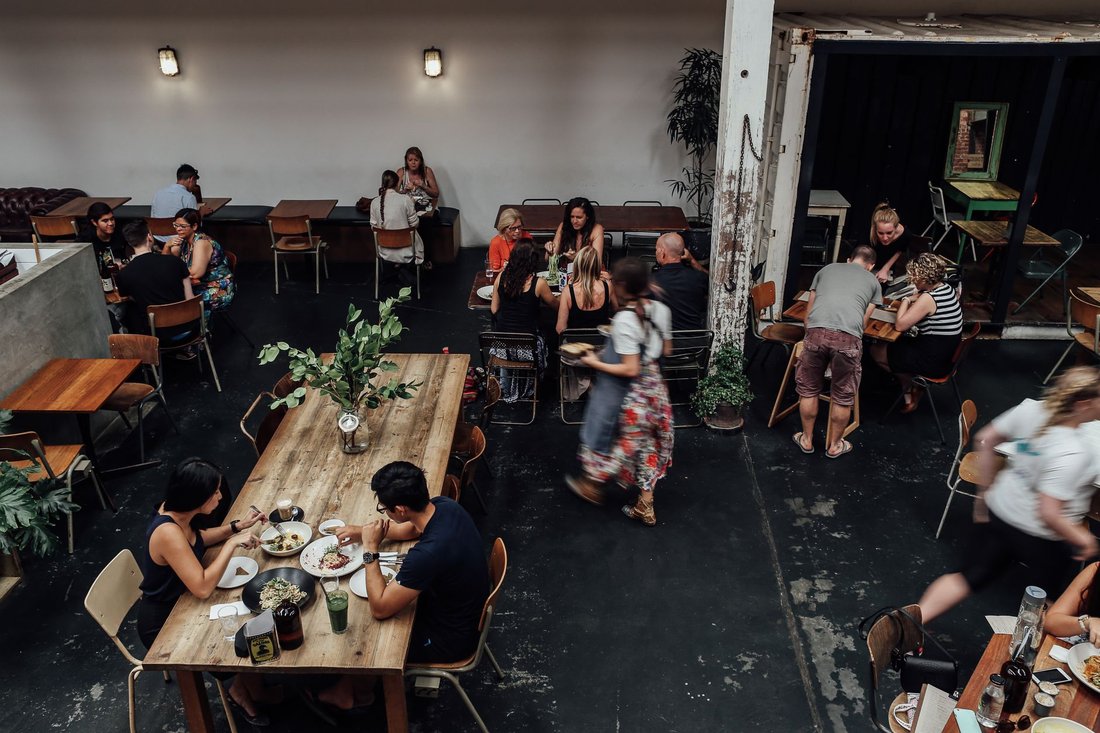
A woman in green scrubs walks a tray past a Nigerian jollof stall, a raw bar shucking oysters, and a case of kolaches, hunting for a table before her lunch break ends. Nobody blinks. This is what makes the best food halls in Houston different from the ones popping up in mid-size cities everywhere else: the vendor lineup is not assembled for novelty, it is a shorthand for who actually lives here. Montrose regulars, Texas Medical Center nurses, downtown lawyers on a lunch hour, and a family that just got off a shift near the port can sit at the same communal table and order nothing in common.
There is no zoning in Houston, which gets treated as a punchline elsewhere but functions here as a kind of permission. A warehouse near downtown, a strip-mall anchor in the Heights, an old auto shop in Midtown, any of them can become a food hall without years of hearings. That flexibility matters more in a city this layered than it would somewhere with one dominant cuisine to showcase. Houston does not have a single food identity to sell. It has dozens running in parallel, and a food hall is one of the only formats built to hold that many at once under a single roof.
What Makes the Best Food Halls in Houston
The best food halls in Houston are not mini malls with a food court bolted on. They function as low-risk staging grounds. A family that has run a stall at a Gulfton market for a decade can test a formal storefront concept without signing a ten-year commercial lease. A chef who trained in a hotel kitchen downtown can try out a menu built entirely around Gulf seafood before committing to a full dining room. The stalls turn over. The good ones get discovered, expand, and sometimes leave for their own address a few years later, which is part of the appeal if you go regularly. You are watching a farm system, not a finished product.
The best ones also get the bar program right. A shared bar in the middle of the room, pouring cocktails or local beer, does more to make sixty strangers feel like one crowd than any amount of careful seating ever could. It gives the room a center of gravity beyond the food itself.
Where They Cluster
Food halls tend to show up where the neighborhoods already have foot traffic and a built-in mixed crowd. Montrose, with its arts scene and long LGBTQ history, has the density and the eclectic dining culture to support a hall that mixes a wine bar with a taco stall without either one feeling out of place. The Heights, with its bungalow streets and brewery culture, tends to produce halls that lean into a patio-forward, slower afternoon crowd. Downtown and EaDo pull the stadium and office crowd, busy before a game at Minute Maid Park and quieter midweek at lunch. Midtown's density of young renters supports a later, bar-forward room. And the Chinatown and Bellaire corridor, one of the largest and most self-sufficient Asian food districts in the country, has its own version of the format built into strip-mall food courts that predate the trendier downtown halls by years and still do it better.
What to Order, and How to Navigate It With a Group
A food hall only works if everyone in your party stops trying to agree on one thing to eat. Splitting up is the entire point.
- Send everyone to a different stall first, then regroup at the table. Nobody has to compromise on the one thing they were craving.
- Order a great bowl of pho early if it is on offer. It holds its heat and its texture better than most other options while you wait on the rest of the table.
- Save one stop for something you would not normally order for yourself. That is the actual advantage of the format over a single restaurant menu.
- If there is a bakery or breakfast stall doing kolaches by the dozen, grab a few to go regardless of what time it is. They travel well and nobody regrets having them in the car.
When to Go
Weekday lunch gets you a hall running at half capacity, easier tables, and a fast line, which is the better call if you actually want to sit and eat rather than stand and wait. Weekend evenings are louder, the bar is fuller, and it becomes more of a destination than a meal. Neither approach is wrong. They are just different rooms wearing the same address.
The real case for the format in Houston is not novelty. It is that the city does not have one cuisine it performs for outsiders, and a food hall is the rare place built to let that show without forcing a theme onto it. Go without a plan for what you are ordering. Let the room decide.