Best Italian Restaurants in Houston, Tried and Tested
A field guide to finding genuinely good Italian food in Houston, from the neighborhoods worth scouting to the menu signals that separate real craft from red-sauce theater.
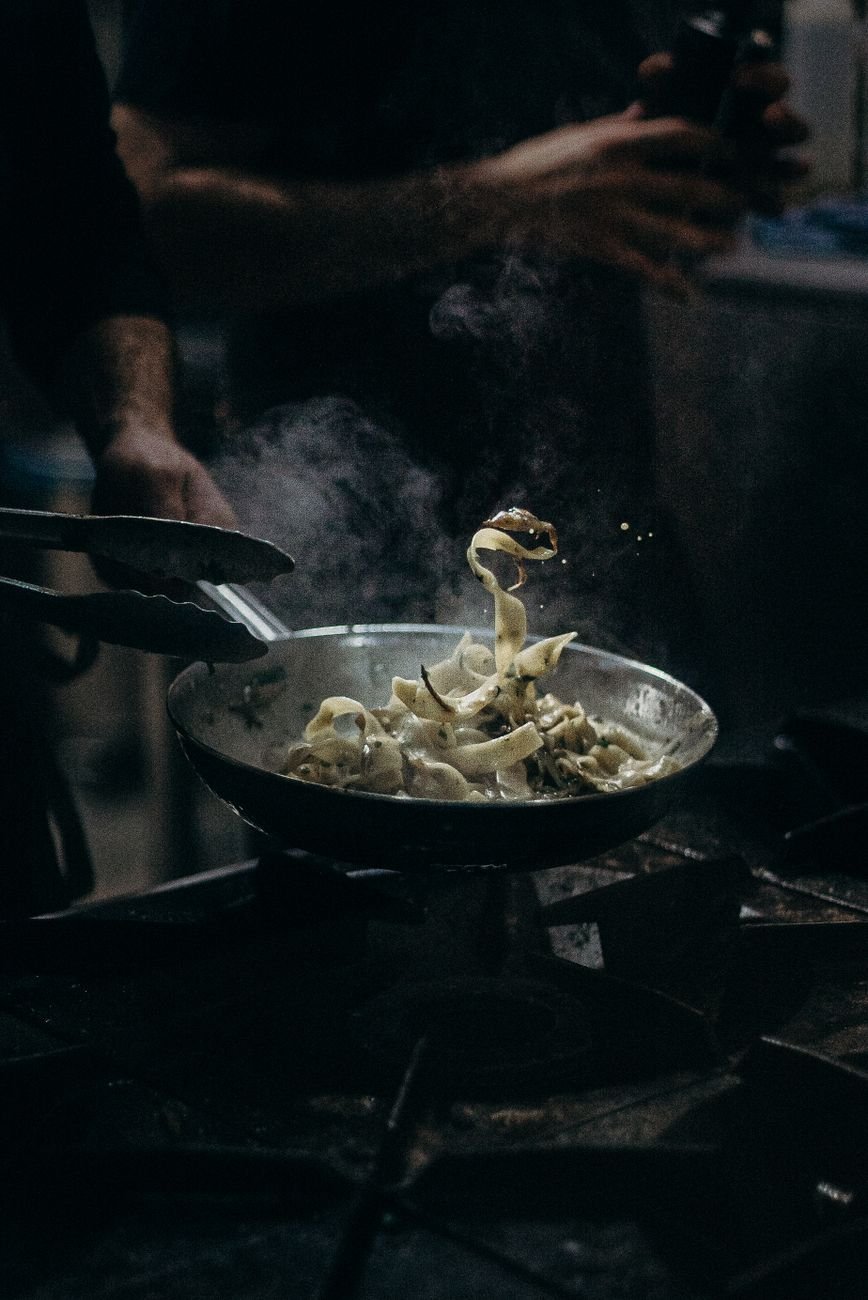
There is a particular moment, somewhere between the third and fourth bite of a properly made cacio e pepe, when the sauce tightens into silk against the pasta and the black pepper blooms without scorching your throat, that you understand exactly how much can go wrong in Italian cooking. Houston has plenty of places that get this wrong. It also has a growing number that get it spectacularly right, and knowing which is which requires more than reading Yelp stars.
If you are serious about finding the best Italian restaurants in Houston, start by resetting your expectations about what Italian food in Texas is supposed to mean. For decades, the city's Italian dining scene was dominated by red-checkered-tablecloth Americanized versions of the cuisine, dishes that are not wrong so much as they are a genre of their own, one that has little to do with how people actually eat in Bologna or Palermo or Rome. The good news is that a newer generation of restaurants has shifted that conversation meaningfully.
Where to Find the Best Italian Restaurants in Houston
Houston's restaurant geography matters. The Heights and Montrose corridors have absorbed most of the serious independent Italian operators over the past decade, partly because the neighborhoods attract diners who travel and eat adventurously, and partly because the real estate and foot-traffic dynamics make ambitious small-format restaurants viable there. Midtown has a few strong options oriented toward a younger crowd that wants good pasta without full ceremony. EaDo, still shaking out its identity post-gentrification, has a handful of spots worth knowing. The Museum District and Upper Kirby edges occasionally surprise.
You will not find a single Italian corridor the way Bellaire Boulevard functions for Vietnamese and Chinese cooking, or Gulfton does for pan-Latino food. Italian is scattered, which means some navigation is required. The payoff is that the good places are genuinely good, not airport-lounge-Italian, not Olive Garden with better lighting, but cooking that reflects at least a passing acquaintance with the actual regions of Italy. Each neighborhood rewards a slightly different approach.
How to Read an Italian Menu Before You Sit Down
The menu is your best diagnostic tool. A serious Italian restaurant in 2025 names the pasta shape and usually the pasta type (fresh egg pasta versus extruded dried pasta) because the choice is not decorative. Rigatoni alla vodka and pappardelle al ragù are not interchangeable; the sauce clings differently, the texture changes the whole experience. If a menu lists only "pasta" without specifying the format, that is a signal about how much the kitchen is thinking.
Regional coherence matters too. A restaurant anchored in Roman cooking (carbonara, cacio e pepe, amatriciana, coda alla vaccinara) should read differently from one working in a Neapolitan mode, where pizza takes structural precedence and the tomato is a religion. A menu that mixes everything from every region without acknowledging it is usually a menu that executes none of it well. This is not dogma; it is pattern recognition.
Look at the antipasti section. A kitchen that takes its cold starters seriously, with a well-sourced burrata that has real texture variation, a carpaccio cut to the right thickness, a vegetable preparation that reflects actual technique, is usually a kitchen that takes everything seriously. Generic iceberg salads dressed in Italian-brand dressing are not a neutral signal.
Pasta: What Separates Real Craft from the Rest
Fresh pasta made in-house is not automatically better than dried pasta of high quality. It is a common misunderstanding in Italian restaurant culture. A dried rigatoni from a serious Italian producer, cooked to an honest al dente and finished properly in the pan with its sauce, is superior to mediocre house-made pasta. What matters is whether the kitchen understands the relationship between the shape, the sauce, and the cook time.
Ask about the pasta when you can. A server at a serious place will know whether it is house-made, what semolina they use, and how they finish each dish. If the answer is vague or if the server clearly does not know, you have learned something. The pasta programs worth your time tend to be the ones people talk about specifically, not generically.
Sauce ratios are the other tell. Italian cooking, real Italian cooking, uses sauce to coat pasta, not to drown it. A bowl where you can see a puddle of liquid under the noodles is a bowl where the pasta was not finished in the sauce. It is a small thing that signals something larger about attention to process.
Pizza: The Napoletana vs. New York Divide
Houston's pizza scene has matured considerably. The city now has practitioners of genuine Napoletana-style pizza (leopard-spotted crusts from wood-fired ovens running at 900 degrees, San Marzano tomatoes, fior di latte) alongside places doing an excellent New York-influenced version with crispier crusts meant to fold. Both are valid. What you want to avoid is the middle ground: a pizza that is neither properly charred nor properly crisp, with toppings piled so high that the center turns soggy.
A serious pizza program will tell you about its fermentation time. Dough that ferments for 24 to 72 hours develops a flavor complexity and a digestibility that same-day dough simply cannot match. This is worth asking about, and a restaurant proud of its process will not mind being asked.
The Wine List and What It Tells You
An Italian restaurant that pairs a serious pasta and pizza program with a wine list anchored mostly in California Cabernet and generic Pinot Grigio is a restaurant that has not thought its identity all the way through. The regions of Italy produce wines that are specifically built to work with Italian food: the acidity of a Barbera cuts through rich meat sauce, Vermentino from Sardinia does things with seafood that Chardonnay simply does not. A list that includes even a handful of these regional options (Nero d'Avola, Aglianico, Greco di Tufo, Lambrusco) suggests a kitchen and a floor that are working from the same philosophy.
The Real Takeaway
Houston's Italian dining scene is not Chicago's or New York's, and measuring it against those cities misses the point. What Houston has is a food culture that rewards curiosity and punishes complacency. The same instincts that built the city's Vietnamese, Salvadoran, Nigerian, and Indian restaurant scenes apply here. The places doing Italian food well in this city are doing it because they want to, not because it is easy or because the margin is comfortable. Find those places by looking at the details: the pasta names, the regional coherence, the wine list, the server's knowledge. They are out there, scattered across the 610 loop and beyond. You just have to know what you are looking for.