Montrose Neighborhood Guide Worth Exploring
Montrose runs on proximity, not zoning, and the neighborhood rewards anyone willing to walk it slowly instead of checking it off a list.
The corner of Westheimer and Montrose Boulevard does more explaining than any street sign could. In the time it takes the light to change, a couple in matching leather jackets crosses next to a woman walking a dog in a rescue-shelter bandana, trailed by two grad students arguing about a gallery opening down the block. Nobody looks twice at anybody. That unbothered mix is the real subject of any montrose neighborhood guide worth writing, more than the murals or the cocktail menus that tend to get top billing.
Houston has no zoning, which means neighborhoods here get their shape from habit and history rather than city ordinance. Montrose is the clearest proof of what that produces: a bungalow-lined street can dead-end into a converted warehouse, a decades-old church can sit two doors from a bar that didn't exist five years ago, and none of it reads as chaos. It reads as a place that grew the way its people needed it to.
How Montrose Became Montrose
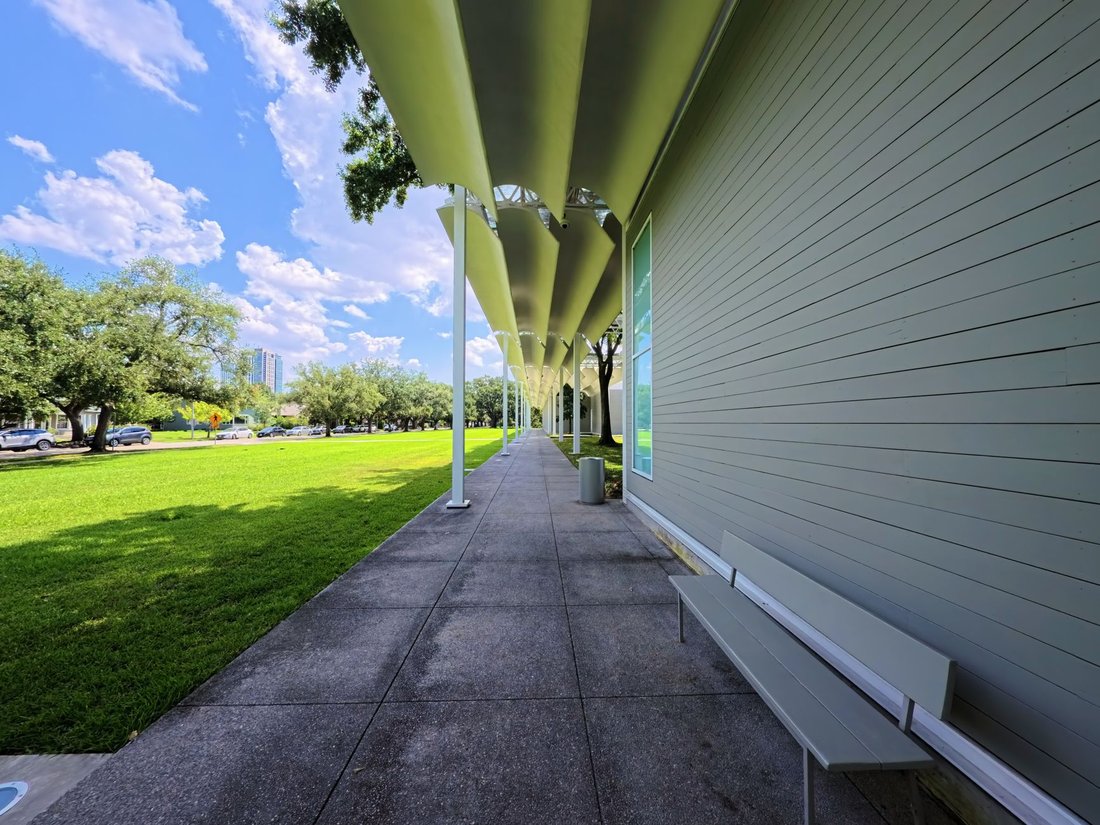
The neighborhood's identity as Houston's LGBTQ anchor didn't arrive by accident. Through the latter half of the twentieth century, Montrose became one of the few parts of the city where that community could live openly, build institutions, and put down roots that held even as rents climbed around them. The history is still visible if you know to look for it, in longtime storefronts, in the rhythm of the bars along lower Westheimer, and in a civic memory that residents here talk about with real pride rather than nostalgia. Artists followed for the same reason anyone follows an open neighborhood: cheap rent and few questions asked. The Menil Collection area, with its low-slung campus and free galleries tucked among live oaks, grew out of that same era and still sets the tone for how the neighborhood thinks about art, which is to say quietly and without much ceremony.
A Montrose Neighborhood Guide Starts on Foot
Montrose is one of the rare Houston neighborhoods where a car is optional for a full afternoon. Park once, near the Menil grounds or along one of the residential streets east of the boulevard, and let the walk do the organizing. The blocks shift character every few minutes: a run of restored 1920s bungalows with deep porches, then a stretch of low-rise apartments from the seventies, then a commercial strip that looks like it was assembled by a dozen different decades at once. None of it reads as a flaw. It's the clearest evidence that nobody planned this place from above.
Murals show up on utility boxes, side walls, and the blank ends of buildings, usually without a plaque explaining who painted them or when. Treat that as part of the experience rather than an oversight. The neighborhood puts on no show for visitors, which is exactly what keeps it from feeling staged the way more polished districts can.
What to look for while walking
- Porches with window units and hand-painted house numbers, a sign of a block that has resisted total teardown-and-rebuild
- Rainbow flags and community bulletin boards outside longstanding storefronts, still doing quiet civic work
- Side streets off Montrose Boulevard where the traffic noise drops away almost immediately
- Mixed building stock on a single block, evidence of the no-zoning pattern at its most visible
The Food Corridor Nobody Sorts by Cuisine
Ask five Montrose regulars where to eat and you'll get five different answers pulled from five different countries, and none of them will treat that as unusual. Vietnamese pho counters and bánh mì shops sit near Tex-Mex spots built around fajitas and cold beer, which sit near breakfast counters serving kolaches to people on their way to work. Montrose's food scene tends to get filed under nightlife, thanks to a run of craft cocktail bars that draw people in from across the city, but the daytime version of the neighborhood is just as worth the trip. For a wider sense of how this fits into the rest of the city's dining scene, it helps to remember that Montrose has always pulled from more directions than most Houston neighborhoods, which is part of why the food here resists easy categorizing.
Where the Art Still Sets the Tone
The museums clustered near the edge of Montrose, close to Hermann Park and the wider Museum District, give the neighborhood an easy excuse for a longer visit. But the art inside Montrose itself, smaller galleries, studio spaces, the murals mentioned earlier, tends to matter more to the people who actually live here. It isn't arranged for tourism. It's the byproduct of decades of artists choosing this neighborhood because it let them work without much interference, and that spirit hasn't fully disappeared even as the real estate around it has changed.
Getting Around Without Overplanning It
Montrose sits close enough to the 610 loop and downtown that a short drive covers most of Houston from here, but the neighborhood rewards ignoring that convenience for a few hours. Sidewalks are consistent enough to make walking realistic, something not every Houston neighborhood can claim, and the density of things to see on any given block means a slow pace pays off more than a rushed one. Save the car for getting in and out. Once you're there, let the blocks set the itinerary.
The mistake visitors make with Montrose is treating it like a checklist of bars and murals to photograph in an afternoon. The neighborhood works better as an ongoing relationship than a single visit. Walk it in the daytime and again at night, eat somewhere that has nothing to do with the neighborhood's reputation for cocktails, and pay attention to what's still standing after decades of change. That durability, more than any single landmark, is what Montrose actually has to offer.